

Masai Mara Entry Fees 2026
Quick answer: a non-resident adult pays USD 100 per day from 1 January to 30 June and USD 200 per day from 1 July to 31 December to enter the Masai Mara National Reserve. Children aged 9–17 pay USD 50, children aged 8 and under enter free, and each ticket covers one 12-hour day (06:00–18:00). Vehicle entry is charged separately.
Kenya’s wildlife conservancies alone cover more than six million hectares, roughly 11% of the country’s land, and the Masai Mara National Reserve sits at the heart of the best known of them: about 1,510 km² of open grassland, riverine forest along the Mara and Talek rivers, acacia woodland and the Oloololo (Siria) Escarpment, joined to Tanzania’s Serengeti in the south. The reserve is managed by the County Government of Narok, and its western section, the Mara Triangle, is run by the not-for-profit Mara Conservancy. Both charge daily conservation (entry) fees that depend on four things: your residency, your age, the season and how many days you spend inside.
Below, we explore every 2026 rate in sortable tables, show how the 12-hour ticket and the 10:00 departure rule really work, and give you a calculator that totals people, vehicle, camping and ranger charges for your exact dates.
When do Masai Mara fees change during the year?
Two seasons, one switch-over date: fees step up on 1 July and drop back on 1 January.
The Mara uses a two-season fee calendar. The green (low) season runs 1 January to 30 June and the high season runs 1 July to 31 December, which overlaps the months when the wildebeest migration is usually on the Kenyan side. The season is decided by the calendar date of each day you enter, so a safari that straddles 30 June and 1 July pays both rates.
Tap a month to see the daily adult and child rate for that month.
| Green / low season | 1 January – 30 June |
|---|---|
| High season | 1 July – 31 December |
| Children aged 8 and under | Free entry, all year |
| Fee basis | Per person, per day (plus a separate per-vehicle charge) |
| Ticket validity | 12 hours, 06:00–18:00, whatever time you enter |
| Departure day | Exit by road, or reach the airstrip, before 10:00 to avoid another day’s fee |
Important: fees are charged per calendar day of entry. Leaving and re-entering on a different day needs a new ticket.
How much does each type of visitor pay to enter the Masai Mara?
Pick your residency. Non-residents pay in US dollars; Kenyan citizens and residents pay in Kenya shillings.
Your rate depends on the document you can show at the gate. Non-residents (international visitors without a Kenyan or East African residence permit) pay the dollar rate. Kenyan citizens pay the lowest national rate with a national ID, East African residents (Kenya, Uganda, Tanzania, Rwanda and Burundi) pay a shilling rate with valid residency papers, and Narok County residents have their own local rate with proof of residence. Rates are the same whether you sleep inside or outside the reserve.
Non-resident (international) visitors, per person per day
| Visitor | Jan–Jun | Jul–Dec |
|---|---|---|
| Adult (18+) | USD 100 | USD 200 |
| Child, 9–17 years | USD 50 | USD 50 |
| Student (organised group) | USD 50 | USD 50 |
| Child, 8 years and under | Free | Free |
The same dollar rates apply whether you stay at a lodge inside the reserve or at a camp outside it. The high-season rate doubles only for adults; the child rate stays at USD 50 all year.
Kenyan citizens, per person per day
| Visitor | Jan–Jun | Jul–Dec |
|---|---|---|
| Adult (18+) | KES 1,500 | KES 3,000 |
| Child, 9–17 years | KES 300 | KES 500 |
| Student (organised group) | KES 300 | KES 500 |
| Child, 8 years and under | Free | Free |
Carry your national ID; children use a birth certificate. Without accepted ID the gate can charge a higher category.
East African residents, per person per day
| Visitor | Jan–Jun | Jul–Dec |
|---|---|---|
| Adult (18+) | KES 2,500 | KES 5,000 |
| Child, 9–17 years | KES 1,000 | KES 2,000 |
| Student (certified clubs) | Free | KES 300 |
| Child, 8 years and under | Free | Free |
Applies to residents of Kenya, Uganda, Tanzania, Rwanda and Burundi with a valid work or residence permit in their passport.
Rate variance: one 2026 press summary lists East African resident students at KES 300 (low) and KES 500 (high). The schedule above follows the county’s certified-club rate; confirm the student category with the gate before travelling.
Narok County residents, per person per day
| Visitor | Jan–Jun | Jul–Dec |
|---|---|---|
| Adult (18+) | KES 1,000 | KES 2,000 |
| Child, 9–17 years | KES 200 | KES 500 |
| Students (bus-load, in uniform) | Free | KES 300 |
| Child, 8 years and under | Free | Free |
Proof of Narok County residency is required at the gate.
Rate variance: older county notices quoted a flat KES 2,000 per adult and KES 500 per child above 10 for Narok residents. If your documents are queried, ask the KAPS officer which Narok schedule is being applied.
Green bars show January–June, orange bars July–December. Dollar rates are converted at the exchange rate you set below so all four categories share one scale.
Which visitor category pays the most and the least?
Sort any column or filter by residency. The KES columns put dollar and shilling rates on one scale.
A non-resident adult in high season pays the most of any category, roughly 8.6 times the KES 3,000 Kenyan-citizen adult rate and nearly 26 times the KES 1,000 Narok-resident green-season rate, at an exchange rate near 129. At the other end, children aged 8 and under are free in every category, and certified student groups from East Africa and Narok enter free in the green season.
Tip: tap a column heading to sort. Scroll sideways on small screens.
| Non-resident | Adult | USD 100 | USD 200 | ||
| Non-resident | Child 9–17 | USD 50 | USD 50 | ||
| Non-resident | Student (organised group) | USD 50 | USD 50 | ||
| Kenyan citizen | Adult | KES 1,500 | KES 3,000 | ||
| Kenyan citizen | Child 9–17 | KES 300 | KES 500 | ||
| Kenyan citizen | Student (organised group) | KES 300 | KES 500 | ||
| East African resident | Adult | KES 2,500 | KES 5,000 | ||
| East African resident | Child 9–17 | KES 1,000 | KES 2,000 | ||
| East African resident | Student (certified clubs) | Free | KES 300 | ||
| Narok resident | Adult | KES 1,000 | KES 2,000 | ||
| Narok resident | Child 9–17 | KES 200 | KES 500 | ||
| Narok resident | Students (bus-load, uniform) | Free | KES 300 |
KES equivalents for dollar rates use the exchange rate set in the chart above (default 129). They are planning figures, not gate prices.
How much will park fees cost for your trip?
Enter your group, dates and vehicle. The calculator applies the right season to each day, even across 30 June and 1 July.
Estimates use the 2026 schedule on this page. They exclude private conservancy fees, balloon flights, aircraft landing fees and anything your lodge or operator adds. Gate staff apply the current schedule on the day.
How long is a Masai Mara ticket valid, and when do you need a new one?
The ticket runs 06:00 to 18:00 on the day you enter. It does not start a 12-hour countdown.
A Masai Mara entry ticket is a 12-hour day ticket valid from 06:00 to 18:00, regardless of the time you enter, and it does not carry over to the next day. The county moved from a 24-hour ticket to this 12-hour rule in July 2023. Two linked rules matter when you leave: guests departing by road must exit by 10:00, and guests flying out must reach the airstrip before 10:00; staying longer adds another day’s fee. Guests staying outside the reserve who only pass through to an airstrip inside it are issued a two-hour transit ticket at the gate.
Do I need another ticket? Pick a situation
What do vehicles pay to enter the Masai Mara?
A per-vehicle, per-day charge on top of everyone’s entry fee, set by seating capacity.
Every vehicle entering the reserve pays a daily vehicle entry charge in Kenya shillings, in addition to the per-person fees. The band depends on the number of seats. A standard pop-top safari Land Cruiser or safari van falls in the 6–12 seat band, so most private safaris pay KES 1,500 per vehicle per day.
| Less than 6 seats | KES 1,000 |
| 6–12 seats | KES 1,500 |
| 13–24 seats | KES 3,500 |
| 25–44 seats | KES 4,500 |
| 45 seats and above | KES 5,000 |

Trucks and goods vehicles
| Truck weight | Fee per day |
|---|---|
| 1–3 tonnes | KES 700 |
| 4–7 tonnes | KES 2,500 |
| 8 tonnes and above | KES 3,500 |
As published in 2026 press summaries of the county schedule. Confirm with the gate for supply and service vehicles.
Rate variance: some 2026 summaries still print older vehicle bands (for example KES 1,000 for 6–12 seats and KES 400–500 for under 6 seats). This page follows the current schedule above; budget the higher figure and let the gate receipt settle it.
How much are camping and ranger fees in the Masai Mara?
Charged per person per night, on top of the daily entry fee.
Campers pay a nightly camping fee in addition to the daily entry ticket. Private (special) campsites cost more than public sites and carry a KES 10,000 reservation fee. Campers who want armed ranger security overnight pay a separate night fee, and any group can hire a ranger to ride along on game drives.
| Visitor | Person | Public site / night | Private site / night |
|---|---|---|---|
| Non-resident | Adult | USD 30 | USD 40 |
| Non-resident | Child / student | USD 20 | USD 20 |
| East African resident | Adult | KES 1,000 | KES 1,500 |
| East African resident | Child / student | KES 200 | KES 500 |
| Kenyan citizen | Adult | KES 1,000 | KES 1,000 |
| Kenyan citizen | Child / student | KES 200 | KES 200 |
Private campsite booking: KES 10,000 reservation fee. Narok-resident camping rates are not published in the 2026 summaries; ask the county office.
| Ranger service | Fee |
|---|---|
| Game drive escort, under 6 hours | KES 1,500 |
| Game drive escort, over 6 hours | KES 3,000 |
| Overnight camp security | KES 4,000 per night |
In the Mara Triangle, the Mara Conservancy asks campers to hire two rangers for night security; rangers are transported to and from the campsite.
Where and how do you pay Masai Mara entry fees?
At the KAPS office in Nairobi, or on arrival from authorised KAPS staff at gates and airstrips.
Tickets are sold by KAPS, the reserve’s appointed ticketing agent, either at the KAPS offices in Nairobi or on arrival from authorised KAPS staff at the gates and airstrips below. Plan to pay cashless, by M-Pesa or card: the Mara Triangle accepts no cash at all, and cashless payment is the dependable option on the Narok side too. Bring the original ID that proves your rate; in the Triangle a driver’s licence is not accepted, and visitors without the right document are charged the non-resident rate.
- Sekenani Gate Gate
- Oloolaimutia Gate Gate
- Talek Gate Gate
- Musiara Gate Gate
- Keekorok Airstrip / lodge
- Olkiombo Airstrip
- Musiara (Governors) Airstrip / camp
- Ewaso Nyiro Airstrip Airstrip
- Simba Lodge point
- Fig Tree Lodge point
- Purungat Bridge Triangle
- Oloololo Gate Triangle
- Serena Airstrip Triangle
Gate-day checklist
0 of 7 ready

Avoid unofficial sellers. Buy only from KAPS offices or uniformed, authorised KAPS staff at gates and airstrips, and keep the printed or electronic receipt until you leave. Rangers check tickets inside the reserve.
Is the Mara Triangle or a private conservancy charged separately?
Yes. Fees are paid to whoever manages the land where you stay and drive.
The Greater Mara has three fee-charging zones. The Narok side of the reserve (Sekenani, Talek, Oloolaimutia, Musiara) is managed by the County Government of Narok. The Mara Triangle, west of the Mara River, is managed by the Mara Conservancy, which sells its own tickets at Purungat Bridge, Oloololo Gate and Serena Airstrip and follows the same seasonal dollar rates. The private conservancies on the reserve’s northern and eastern edges charge their own conservation fees, normally built into the nightly rate of the camps on that land. Mara Triangle fees are paid according to where you stay: if you are booked in the Triangle and drive in through Sekenani, the Conservancy tells visitors not to pay until they reach Purungat Bridge.
| Question | Narok side of the reserve | Mara Triangle | Private conservancies |
|---|---|---|---|
| Managed by | County Government of Narok | Mara Conservancy (not-for-profit) | Landowner conservancies |
| Where you pay | KAPS Nairobi or KAPS staff at gates | KAPS online or at Purungat, Oloololo, Serena Airstrip | Usually in your camp’s nightly rate |
| Non-resident adult | USD 100 / 200 by season | Same seasonal rates | Set by each conservancy |
| Cash accepted? | Pay cashless to be safe | No, M-Pesa or card only | Paid via your camp |
| Ticket | 12 hours, 06:00–18:00 | 12 hours, 06:00–18:00 | Per night of stay |
| Student rates | Organised groups and certified clubs | Age up to 23, groups of 12+, approved two weeks ahead | Ask the conservancy |
Mara Triangle student-rate conditions in full
The Mara Conservancy grants student rates only to individuals aged up to 23, sponsored by a recognised learning institution, holding a valid student ID, travelling in an organised group of 12 or more, and visiting on a school-organised trip or Conservancy-authorised research. Groups must be authorised at least two weeks in advance. Students on personal holidays do not qualify.
Planning which side of the river to base yourself on is a bigger decision than the fee itself. Our guide to where to stay in and around the Masai Mara compares the reserve, the Triangle and the conservancies by game viewing and access.
What do park fees add up to on a real trip?
Five worked examples. Open one, or load it straight into the calculator.
A. Two non-resident adults, high season, 1 dayDay trip in August in a 6–12 seat vehicle
Entry: 2 × USD 200 = USD 400. Vehicle (6–12 seats): KES 1,500.
B. Two adults and two children (9–17), low season, 2 daysNon-resident family in March
Adults: 2 × USD 100 × 2 days = USD 400. Children: 2 × USD 50 × 2 days = USD 200. Entry total USD 600, plus vehicle 2 × KES 1,500 = KES 3,000.
C. Kenyan family over the 30 June / 1 July change2 adults, 1 child aged 12, 1 child aged 6, 3 days from 29 June
29 and 30 June are low season: (2 × 1,500 + 300) × 2 = KES 6,600. 1 July is high season: 2 × 3,000 + 500 = KES 6,500. The 6-year-old is free. Vehicle: 3 × KES 1,500 = KES 4,500.
D. East African resident couple, 3 nights at a lodge inside, OctoberArrive day 1, leave before 10:00 on day 4
Three charged days (days 1–3), provided they clear the gate before 10:00 on day 4. Entry: 2 × KES 5,000 × 3 = KES 30,000. Vehicle: 3 × KES 1,500 = KES 4,500. Leaving after 10:00 on day 4 would add KES 11,500.
E. Non-resident campers, 2 nights at a public campsite, September2 adults, 3 charged days, ranger escort under 6 hours each day
Entry: 2 × USD 200 × 3 = USD 1,200. Camping: 2 × USD 30 × 2 nights = USD 120. Vehicle: 3 × KES 1,500 = KES 4,500. Ranger: 3 × KES 1,500 = KES 4,500.
Which Masai Mara fee myths cost visitors money?
Tap each card to flip from the myth to the reality.
How can you keep Masai Mara park fees down?
Fees are fixed, but how many days you are charged is largely up to your plan.
- Travel between January and June if your dates are flexible. A non-resident adult saves USD 100 per day, and the long-rains months of April and May are the quietest of the year.
- Enter close to 06:00. The ticket ends at 18:00 whatever time you arrive, so a midday entry pays a full day for half the viewing.
- Plan departure-day drives to end before 10:00. A slow breakfast that pushes your exit past 10:00 adds a full day’s fee for the whole group.
- Avoid half days at the end of a road transfer. If you arrive mid-afternoon at a camp outside the reserve, consider settling in and entering at dawn the next morning.
- Carry the right ID for everyone. Residents and citizens without accepted documents can be charged a higher rate on the spot.
- Count young children correctly. Children aged 8 and under are free, so give exact ages when an operator quotes you park fees.
- Share a vehicle. The vehicle charge is per vehicle, so a full 6–12 seater spreads KES 1,500 across more people.
The Mara is one stop on most Kenya trips. If you are still choosing how many days to give it, see our Masai Mara itineraries and the safari logistics guide for road and flight times from Nairobi.
What this page will not promise: that the schedule will hold for 2027, or that every gate applies variance rates the same way. The county reviews fees through its Finance Act, and we update this page when a new schedule is published.
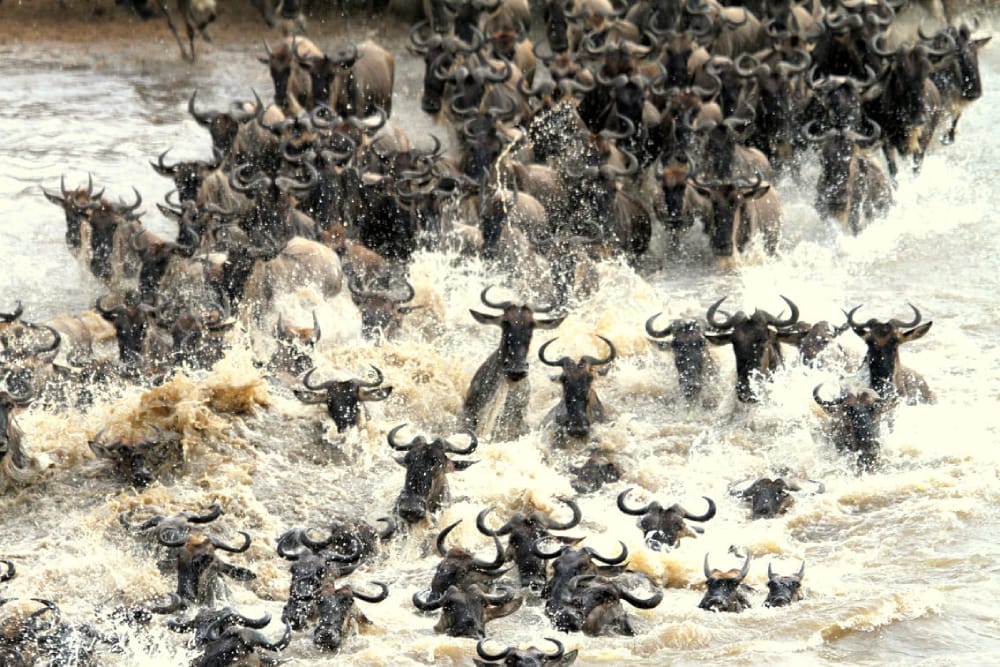
What will your park fees pay to see?
Gates, rivers and the migration, from the reserve your ticket opens.


Masai Mara entry fees: frequently asked questions
Search the questions, or open any answer.
How much is the Masai Mara entry fee in 2026?
Non-resident adults pay USD 100 per day from January to June and USD 200 per day from July to December. Children aged 9 to 17 pay USD 50, and children aged 8 and under are free. Kenyan citizen adults pay KES 1,500 or KES 3,000 by season.
Why does the Masai Mara fee double in July?
Narok County uses seasonal pricing to manage demand during the peak migration months. County officials describe the model as low-volume, high-value tourism, and the higher July to December rate applies to non-resident, citizen, East African resident and Narok resident adults.
Is the Masai Mara ticket valid for 24 hours?
No. Since July 2023 the ticket is valid for 12 hours, from 06:00 to 18:00, whatever time you enter. It does not carry over to the next day.
Do I pay park fees every day if I stay at a lodge inside the reserve?
Yes. Entry fees are charged for each day you are inside, whether you sleep inside or outside the reserve. On departure day, exit by road or reach the airstrip before 10:00 to avoid another day’s fee.
What age do children start paying Masai Mara fees?
Children aged 8 and under enter free. From age 9 to 17 they pay the child rate, which is USD 50 per day for non-residents. From 18 they pay the adult rate.
How much is the vehicle entry fee for a safari Land Cruiser?
A typical safari Land Cruiser or van has 6 to 12 seats and pays KES 1,500 per vehicle per day under the current schedule, on top of each passenger’s entry fee.
Can I pay Masai Mara fees in cash?
Plan not to. The Mara Triangle accepts only M-Pesa and card, and cashless payment is the dependable option at Narok-side gates. Tickets can also be bought in advance at the KAPS office in Nairobi.
Where can I buy Masai Mara tickets?
At KAPS offices in Nairobi, or on arrival from authorised KAPS staff at Sekenani, Oloolaimutia, Talek, Musiara, Simba, Fig Tree, Ewaso Nyiro Airstrip, Keekorok, Olkiombo and Musiara (Governors). Mara Triangle tickets are sold at Purungat Bridge, Oloololo Gate and Serena Airstrip.
Are Mara Triangle fees different from the main reserve?
The Mara Triangle is managed by the Mara Conservancy and collects its own fees, following the same seasonal non-resident rates of USD 100 and USD 200. Fees are paid according to where you stay.
Do private conservancies charge the reserve entry fee?
No. Conservancies bordering the reserve charge their own conservation fees, usually included in the nightly rate of the camp you stay at. You pay the reserve fee only on days you enter the reserve itself.
What ID do residents need to get the resident rate?
Kenyan citizens need a national ID, and citizen children a birth certificate. East African residents need a passport showing a valid work or residence permit. Narok residents need proof of county residency. Without accepted ID you may be charged the non-resident rate.
Who qualifies for the Masai Mara student rate?
Students travelling in organised groups or certified clubs. In the Mara Triangle, students must be up to 23 years old, in a group of 12 or more on a school trip or approved research, and authorised two weeks ahead. Students on personal holidays do not qualify.
What is the two-hour transit ticket?
Guests staying at hotels outside the reserve who must cross it to reach an airstrip inside are issued a two-hour transit ticket at the gate instead of a full day ticket.
Are balloon safaris and landing fees included in entry fees?
No. Balloon flights are sold separately by the balloon operators, and aircraft landing fees are charged per landing, separate from park entry fees. Ask your operator whether these are in your quote.
How much are camping fees in the Masai Mara?
Non-resident adults pay USD 30 per night at a public campsite and USD 40 at a private site, with children and students at USD 20. Kenyan citizen adults pay KES 1,000. A private campsite booking carries a KES 10,000 reservation fee.
Do park fee rates change during 2026?
Only by season: the low rate runs from 1 January to 30 June and the high rate from 1 July to 31 December. Any new schedule would come through Narok County’s Finance Act; check the date on this page before you pay.
Want the fees worked into a full Mara plan?
Send your dates, group ages and where you would like to stay. We will reply with a day-by-day plan that keeps gate times and park-fee days in step.
Sources and update history
Where these figures come from
- County Government of Narok, Masai Mara National Reserve fee schedule (seasonal rates, vehicle bands, ticketing points), as published by the reserve.
- Mara Conservancy, Conservation Fees: 12-hour ticket, cashless payment, ID rules, student conditions, ticket points. Retrieved 17 Oct 2026.
- The Kenya Times, Masai Mara entrance fees and park charges 2026 (6 Aug 2026): camping, ranger, truck fees, 10:00 departure and transit-ticket rules.
- Nation Africa, Narok County on seasonal pricing: low-volume, high-value model and the USD 200 cap.
- Kenyans.co.ke, 2024 fee increase and 12-hour validity.
- Natural Earth (public domain) country borders; Mapbox terrain, roads and imagery; reserve, Mara Triangle and conservancy boundaries © OpenStreetMap contributors, retrieved 17 Oct 2026.
- Africa Check, share of Kenya’s land in wildlife conservancies.
Last checked: 17 October 2026. Next review: on publication of Narok County’s next Finance Act, or 1 January 2027, whichever is sooner.
Photos from Wikimedia Commons under the licences shown in each caption. Map positions from OpenStreetMap contributors.
Published by Mara Reserve – Dedicated Masai Mara Expert Visitors’ Guide (MaraReserve.org)
This guide reorganises the official Masai Mara entry fee schedule into clear tables so visitors and planners can quickly understand who pays what, when, and how fees apply.
1) Seasons & Validity (Applies to All Categories)
| Item | Details |
|---|---|
| Green / Low Season | 1 January – 30 June |
| High Season | 1 July – 31 December |
| Children (≤8 years) | FREE |
| Fee Basis | Per person, per day |
| Ticket Validity | 12 hours (day-use) |
Important: Fees are charged per calendar day of entry. Exiting and re-entering on a different day requires a new ticket.
2) Non-Residents (International Visitors) — Per Day
(Same rates whether accommodated inside or outside the Reserve)
| Category | Low Season (Jan–Jun) | High Season (Jul–Dec) |
|---|---|---|
| Adults | USD 100 | USD 200 |
| Children (9–17 yrs) | USD 50 | USD 50 |
| Students (organized group) | USD 50 | USD 50 |
Planning note: The USD 200 high-season rate aligns with peak migration demand; entering early maximizes the 12-hour window.
3) Kenyan Citizens — Per Day
| Category | Low Season (Jan–Jun) | High Season (Jul–Dec) |
|---|---|---|
| Adults | KES 1,500 | KES 3,000 |
| Children (9–17 yrs) | KES 300 | KES 500 |
| Students (organized group) | KES 300 | KES 500 |
4) East African Residents — Per Day
(Valid EAC residency documentation required)
| Category | Low Season (Jan–Jun) | High Season (Jul–Dec) |
|---|---|---|
| Adults | KES 2,500 | KES 5,000 |
| Children (9–17 yrs) | KES 1,000 | KES 2,000 |
| Students (certified clubs) | FREE | KES 300 |
5) Narok County Residents — Per Day
(Proof of residency required)
| Category | Low Season (Jan–Jun) | High Season (Jul–Dec) |
|---|---|---|
| Adults | KES 1,000 | KES 2,000 |
| Children (9–17 yrs) | KES 200 | KES 500 |
| Students (bus-load, in uniform) | FREE | KES 300 |
6) Vehicle Entry Charges — Per Day
(Charged in addition to per-person entry fees)
| Vehicle Seating Capacity | Fee (KES) |
|---|---|
| Less than 6 seats | 1,000 |
| 6–12 seats | 1,500 |
| 13–24 seats | 3,500 |
| 25–44 seats | 4,500 |
| 45+ seats | 5,000 |
Note: Typical safari Land Cruisers fall in the 6–12 seats category.
7) Where Fees Can Be Purchased
Tickets are available:
- At KAPS offices in Nairobi, or
- On arrival from authorized KAPS staff at the following points:
| Gates / Points |
|---|
| Sekenani |
| Oloolaimutia |
| Talek |
| Musiara |
| Simba |
| Fig Tree |
| Ewaso Nyiro Airstrip |
| Keekorok |
| Olkiombo |
| Musiara (Governors) |
8) Day Trips vs Multi-Day Stays (How Fees Add Up)
| Scenario | How Fees Apply |
|---|---|
| Single day trip | One entry fee (valid up to 12 hours) |
| Multi-day safari | Entry fee charged each day |
| Staying inside the Reserve | Does not remove daily entry fees |
| Re-entry on a new day | New ticket required |
9) Common Misunderstandings (Quick Reference)
| Myth | Reality |
|---|---|
| “Staying inside the Reserve is free.” | Entry fees apply every day regardless of accommodation. |
| “Tickets last 24 hours.” | Tickets are 12-hour day-use. |
| “Vehicle fees are included.” | Vehicle entry is separate. |
| “All children pay.” | 8 years and below are free. |
10) Worked Cost Examples
Example A — 2 Non-Resident Adults, High Season (1 Day)
| Item | Cost |
|---|---|
| Entry fees | 2 × USD 200 = USD 400 |
| Vehicle (6–12 seats) | KES 1,500 |
Example B — 2 Adults + 2 Children, Low Season (2 Days)
| Item | Cost |
|---|---|
| Adults | 2 × USD 100 × 2 days = USD 400 |
| Children | 2 × USD 50 × 2 days = USD 200 |
| Total entry | USD 600 (+ vehicle fees per day) |
Key Takeaways
- Fees are transparent once you track season, residency, age, and day-use rules.
- Enter early to maximize value within the 12-hour window.
- Budget vehicle fees separately.
- For multi-day trips, plan entry times carefully to avoid paying for short partial days.